What Should Be Noted When Performing Moxibustion: Safety Tips and Precautions
Moxibustion is generally safe when done correctly — but getting it wrong can mean burns, smoke irritation, or making your condition worse instead of better. Knowing what to watch out for before you light that moxa stick will keep your practice safe, effective, and comfortable.
This guide covers every important precaution you need to know: from room setup and proper technique to contraindications and emergency handling.
Before You Begin: Room Setup and Preparation
1. Ventilation Is Non-Negotiable
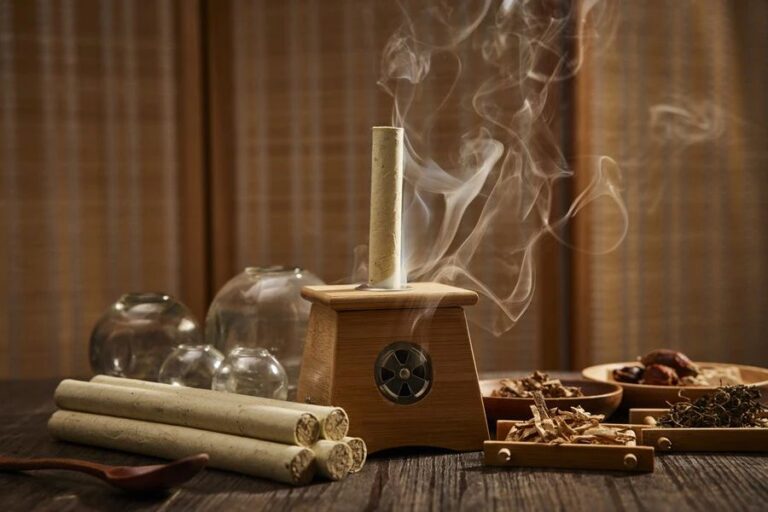
Burning moxa produces smoke similar to incense. Good airflow prevents smoke buildup that can irritate eyes and lungs.
- Open a window at least 2–3 inches, even in cold weather.
- Position yourself so smoke drifts AWAY from your face, not toward it.
- Use a small fan pointed toward the window (not toward the moxa) to direct smoke outward.
- If you have asthma, COPD, or smoke sensitivity, use smokeless moxa sticks instead — they produce almost no visible smoke. → Compare smokeless vs traditional moxa →
2. Fire Safety Setup
A burning moxa stick reaches temperatures of 550–700°C at the tip. Treat it with the same respect you’d give any open flame.
- Keep a bowl of sand, salt, or a metal moxa extinguisher within arm’s reach. Never use water — it can cause the stick to splinter and smolder dangerously.
- Place a ceramic plate, metal tray, or fireproof mat under the treatment area to catch falling ash.
- Remove flammable items (curtains, papers, clothing) from the immediate area.
- Do NOT use moxa in bed or on soft furniture where a dropped stick could ignite fabric.
3. Choose the Right Environment
- The room should be warm and draft-free — you want the moxa doing the warming, not fighting against cold air.
- Avoid moxibustion in bathrooms (too humid), near open flames (gas stoves), or in small unventilated rooms.
- Consider using smokeless moxa sticks when treating indoors to minimize smell.
During Treatment: Position, Distance, and Sensation
Body Position Matters
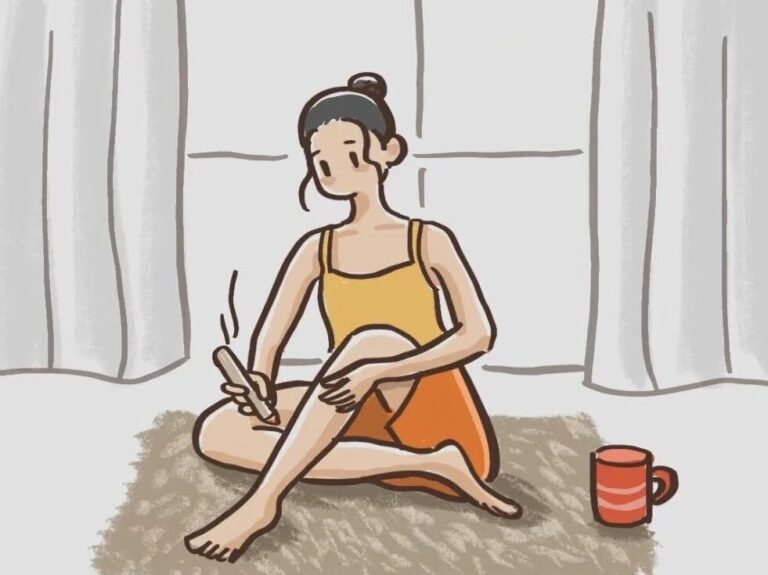
- Choose a comfortable position you can maintain for 15–30 minutes without fidgeting. Lying down or reclining is ideal.
- Make sure the body part being treated is relaxed, not tensed or twisted.
- Follow the TCM directional principle: treat the back first, then the front; head and neck before trunk; right before left. This encourages healthy downward energy flow.
Correct Distance and Technique
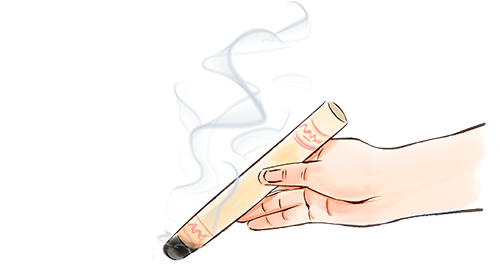
- Hold the moxa stick 1–2 inches (3–5 cm) away from the skin surface. Smokeless moxa may need to be slightly closer (1.5–3 cm).
- Move the stick in small, slow circular motions or gentle pecking movements. Never hold it completely still over one spot.
- Use a moxa stick holder or extender tool for hard-to-reach areas like the back.
Know the Right Sensation
The goal is a comfortable, penetrating warmth — not intense heat or burning. Signs that treatment is correct:
- ✅ Deep, spreading warmth that feels like it “sinks in” to the muscle
- ✅ Mild, pleasant tingling sensation
- ✅ Gentle redness of the skin (like a mild sunburn, not bright red)
- ✅ Sense of relaxation and warmth radiating outward
Stop immediately if you feel:
- ❌ Sharp pain or stinging
- ❌ Intense burning sensation
- ❌ Bright red skin or blistering
Common Technique Mistakes to Avoid
| Mistake | Why It’s a Problem |
|---|---|
| Holding the stick too close | Causes burns, blisters, scarring |
| Staying perfectly still over one spot | Creates a concentrated heat point that can burn skin |
| Treating one point too long | 20 minutes max per point; overtreatment can drain energy and irritate skin |
| Too many points in one session | Limit to 3–5 points per session to avoid overtaxing the body |
| Falling asleep during treatment | Risk of dropping lit moxa, burns, and fire |
After Treatment: Critical Aftercare Steps
What you do immediately after moxibustion can make the difference between lasting benefit and lost effect. → Full aftercare guide →
- Keep the area warm. Cover the treated area with light clothing or a small towel. Cold exposure within 1–2 hours of treatment can undo the warming effect.
- Drink warm water. Helps the body process the treatment and prevents dryness. Avoid cold or iced beverages for at least 2 hours.
- Rest for 15–30 minutes. Let the body integrate the treatment. Skip vigorous exercise, hot showers, or cold exposure.
- Slight redness is normal and fades within 30–60 minutes. If redness persists or blistering appears, apply aloe vera and keep the area clean.
Contraindications: When NOT to Use Moxibustion
Absolute Contraindications (Do Not Use)
- High fever (above 38.5°C / 101.3°F): Moxibustion is warming. Adding heat to a heat condition worsens it.
- Active bleeding or acute infection: The increased blood flow from moxa can worsen bleeding and spread infection.
- Pregnancy: Certain points (especially lower abdomen and lower back) can stimulate uterine contractions. Only use under qualified professional supervision.
- Over areas with loss of sensation: Diabetic neuropathy, nerve damage, or any condition where the person cannot feel heat properly — burns are a serious risk.
Relative Contraindications (Use with Extra Caution)
- Anticoagulant medications (blood thinners): Increased risk of bruising and bleeding from the heat.
- Skin conditions: Eczema, psoriasis, open wounds, or recent burns on the treatment area — avoid entirely.
- Severe exhaustion: In states of extreme weakness, the body may not tolerate stimulation well. Use very gentle, brief treatment or skip entirely.
- Children and elderly: Use extra-thick barrier (extra layer of clothing/towel), shorter sessions (5–10 minutes), and choose smokeless moxa to reduce respiratory irritation.
Fire Safety: Proper Extinguishing and Storage
Most moxibustion accidents happen after treatment, not during.
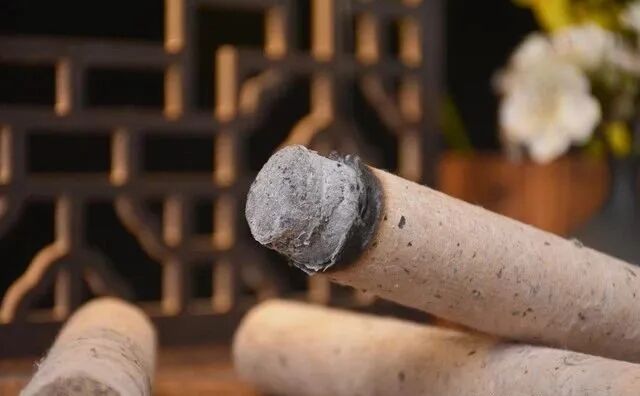
- To extinguish: Press the lit end firmly into a bowl of sand, salt, or use a metal moxa extinguisher. Hold for 5–10 seconds until no ember is visible. Do NOT use water — wet moxa can smolder internally and reignite later.
- After extinguishing: Wait at least 30 minutes before disposing of the used moxa stick. Store cooled sticks in a metal container, not in a trash bin with paper.
- Never leave a lit or recently extinguished moxa stick unattended.
Frequently Asked Questions
Does moxa smoke contain carbon monoxide?
Burning moxa produces combustion byproducts similar to any burning plant material — primarily particulate matter, volatile organic compounds, and trace carbon monoxide. With proper ventilation (open window), these levels remain well within safe limits for short sessions. If you’re concerned, smokeless moxa sticks eliminate most smoke-related compounds. → See smokeless options →
Can I do moxibustion near infants or pets?
No. Infants have very sensitive respiratory systems and cannot communicate discomfort. Pets may be curious about the glowing tip and get burned or knock over the moxa stick. Keep children and animals away from the treatment area entirely.
What if I accidentally burn myself?
For minor redness: cool the area with lukewarm (not ice-cold) water for 5–10 minutes, apply aloe vera gel, and keep clean. For blistering: do not pop the blister — cover with a sterile bandage and monitor for infection. Seek medical attention for severe burns or any signs of infection.
Should I eat before or after moxibustion?
Avoid treatment on a completely empty stomach or when overly full. A light meal 30–60 minutes before treatment is ideal. Wait at least 1 hour after a heavy meal. → Detailed timing guidelines →
Bottom Line
Moxibustion is safe and effective when you follow a few simple rules: ventilate the room, keep the stick at the right distance, listen to your body’s signals, and never leave burning moxa unattended. Most problems come from rushing, getting distracted, or ignoring early warning sensations like stinging or excessive heat.
Take your time, be present during treatment, and you’ll get the full therapeutic benefit without the risks.