Moxibustion for Common Household Ailments: What Moxa Can Treat at Home
You’ve got a moxa stick sitting in your drawer — but when should you actually use it? Moxibustion can treat a surprising range of common household ailments, from the first signs of a cold to chronic joint stiffness that regular heating pads can’t touch. Knowing which conditions respond well to moxa — and which don’t — helps you get real results instead of wasted effort.
In this guide, we’ll walk through 8 common health issues that moxibustion can address at home, with specific acupoints and practical tips for each one.
1. Colds and Early-Stage Flu
Moxibustion is most effective at the first hint of illness — that scratchy throat, slight chill, or mild aches that signal something is brewing. In TCM, this is the “wind-cold invasion” stage, where warming therapy can literally push the pathogen back out before it takes hold.
Key acupoints:
- Dazhui (GV14) — Located at the base of the neck between C7 and T1 vertebrae. The body’s primary immune-boosting point.
- Fengmen (BL12) — Two finger-widths below Dazhui, slightly to each side. Opens the “wind gate” to release exterior pathogens.
- Zusanli (ST36) — Four finger-widths below the kneecap, slightly outside the shin bone. Classic longevity point that strengthens overall immunity.
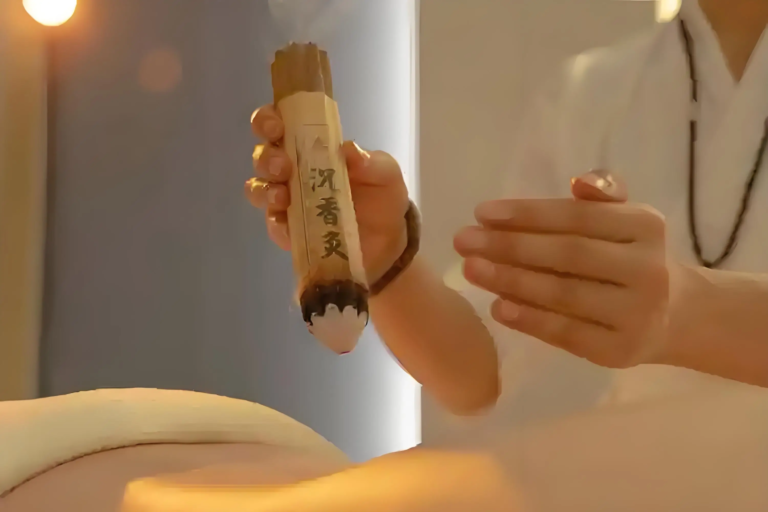
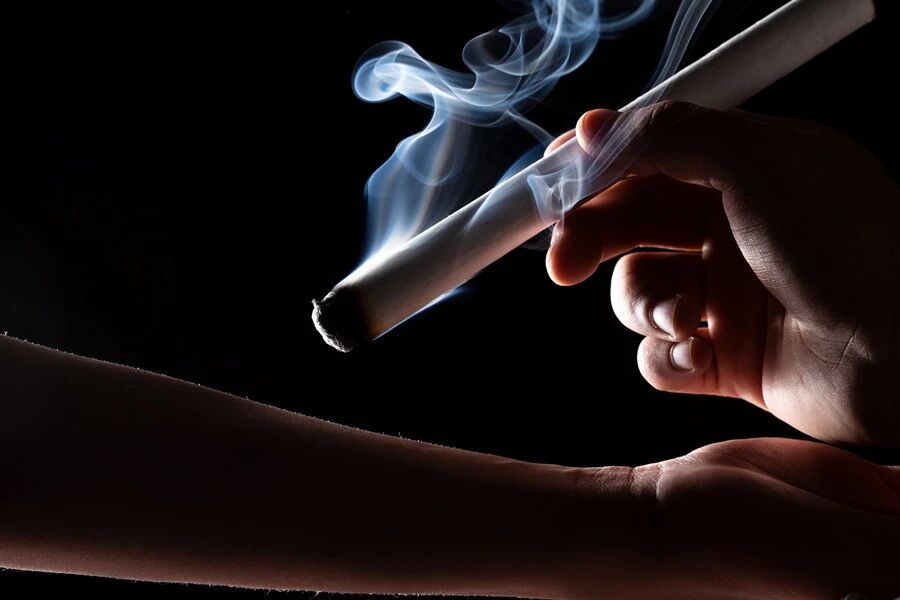
How to apply: Warm each point for 10–15 minutes. For early cold symptoms, doing this 2–3 times throughout the day can often prevent the illness from developing further.
Important: Moxibustion is for cold-type illness (chills, clear mucus, body aches). If you have a high fever, yellow phlegm, or a sore throat with heat signs, skip the moxa — these are heat conditions that warming therapy can worsen. → Read how moxibustion affects the immune system →
2. Headaches and Tension
Moxibustion is particularly effective for tension headaches and those triggered by cold, damp weather, or fatigue. It works by relaxing tight muscles around the head and neck while improving local blood circulation.
When it works best: Dull, pressure-like headaches that worsen with cold or stress. NOT for throbbing migraines with heat sensations or high blood pressure.
Key acupoints:
- Baihui (GV20) — Top center of the head. Lifts yang energy and relieves head tension.
- Taiyang (EX-HN5) — Temple area, in the depression about one finger-width behind the outer eye corner. Directly targets temporal headache pain.
- Hegu (LI4) — The fleshy web between thumb and index finger. A powerful analgesic point for all head and face pain.
How to apply: Hold the moxa stick 1–2 inches away and warm each point for 10–15 minutes. For Baihui, use extra caution — keep the stick steady and avoid overheating the scalp. → See proper moxa technique for head points →
3. Digestive Issues (Bloating, Indigestion, Loose Stools)
In TCM, the digestive system is governed by the “Middle Jiao” (Spleen and Stomach), which requires warmth to function properly. Cold foods, stress, and irregular eating patterns weaken this system over time. Moxibustion provides exactly what cold-damaged digestion needs: sustained, penetrating warmth that restores normal function.
Conditions that respond well:
- Bloating and sluggish digestion after meals
- Loose stools or diarrhea (especially chronic, non-infectious types)
- Stomach discomfort that improves with warmth
- Poor appetite with cold sensations in the abdomen
Key acupoints:
- Zhongwan (CV12) — Midpoint between the navel and the bottom of the sternum. The master point for all stomach and digestive issues.
- Tianshu (ST25) — Two finger-widths to each side of the navel. Regulates bowel function and relieves bloating.
- Zusanli (ST36) — The classic digestive-strengthening point.
How to apply: Warm each point for 15 minutes, ideally 30–60 minutes before meals or 1–2 hours after eating. Daily use for 1–2 weeks can significantly improve chronic digestive weakness.
4. Muscle and Joint Pain (Neck, Shoulders, Lower Back, Knees)
Cold and dampness are the primary triggers for chronic aches and stiffness, especially in older adults or people who work in cold environments. Moxibustion is arguably the most effective TCM therapy for cold-type pain, as it penetrates deeper than any heating pad and actively disperses accumulated cold.
Key acupoints and areas:
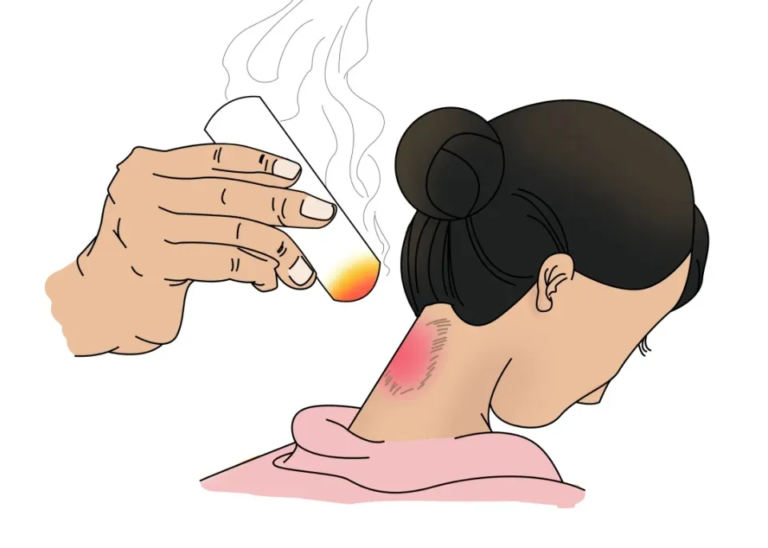
- Local treatment: Apply moxa directly over the painful area, moving the stick in slow circles 1–2 inches above the skin for 10–20 minutes until warmth sinks deep into the tissue.
- Jianjing (GB21) — Top of the shoulder, midway between the neck and the outer shoulder point. Essential for neck and shoulder tension.
- Mingmen (GV4) — Lower back, between L2 and L3 vertebrae. The “Gate of Life” point for chronic lower back pain and overall yang deficiency.
- Dubai (ST35) and internal Xiyan — The depressions on either side of the kneecap. Excellent for knee stiffness and arthritis.
How to apply: For localized pain, spend 15–20 minutes on the affected area plus 10 minutes on the related systemic point (Mingmen for lower back, Jianjing for shoulders). Consistency matters — daily use for 1–2 weeks often produces lasting relief.
5. Fatigue and Low Energy
That bone-deep exhaustion where you feel cold all the time, lack motivation, and can’t shake the tiredness — this is classic Yang Qi deficiency in TCM, and moxibustion is one of the most direct ways to rebuild it. Unlike caffeine or stimulants that borrow energy you don’t have, moxa actually stimulates the body’s own energy production systems.
Key acupoints:
- Guanyuan (CV4) — Three finger-widths below the navel. The primary point for building foundational Qi and treating deep exhaustion.
- Qihai (CV6) — 1.5 finger-widths below the navel. The “Sea of Qi” — directly nourishes energy reserves.
- Zusanli (ST36) — The longevity point; strengthens both Qi and Blood.
How to apply: Warm these points daily for 15–20 minutes per point. A consistent 2–4 week course typically brings noticeable improvement in energy levels, cold tolerance, and overall vitality. → Read more about moxibustion’s tonifying effects →
6. Menstrual Cramps and Irregular Periods
Cold-type dysmenorrhea — cramps that improve with heat, accompanied by clots, scanty flow, or late periods — responds exceptionally well to moxibustion. The warming action directly addresses what TCM calls “cold in the uterus,” one of the most common causes of menstrual difficulties.
Key acupoints:
- Guanyuan (CV4) — The primary point for gynecological issues. Located three finger-widths below the navel.
- Zigong (EX-CA1) — Special uterus point, located three finger-widths below the navel and three finger-widths to each side. Directly targets the reproductive organs.
- Sanyinjiao (SP6) — Four finger-widths above the inner ankle bone, behind the tibia. The master gynecological point that regulates menstruation.
How to apply: Begin treatment 3–5 days before your period is expected, and continue through the first 1–2 days of flow. Warm each point for 10–15 minutes daily. Stop treatment during heavy bleeding days. → Is daily moxibustion right for you? Read our guide →
7. Cold Extremities (Cold Hands and Feet)
Persistently cold hands and feet that don’t warm up easily — even in mild weather — signal circulation problems and underlying Yang deficiency. This is one of the most common complaints that moxibustion addresses effectively.
How to apply:
- Warm the hands and feet directly with the moxa stick for 10–15 minutes each, allowing warmth to gradually penetrate.
- Combine local treatment with systemic points: Mingmen (GV4) for overall yang warming and Shenque (CV8) at the navel for deep core warmth.
- Consistent daily practice over 3–4 weeks typically produces lasting improvement in peripheral circulation.
8. Anxiety and Mild Stress-Related Restlessness
While moxibustion is primarily a warming therapy, certain calming points can settle the nervous system — particularly helpful for anxiety patterns that involve coldness, fatigue, or a sense of inner emptiness (as opposed to agitated, hot-type anxiety).
Key acupoints:
- Yintang (EX-HN3) — Between the eyebrows (the “third eye” point). Calms the mind and spirit.
- Neiguan (PC6) — Two finger-widths above the inner wrist crease, between the tendons. Settles the Heart and relieves anxiety.
- Shenmen (HT7) — On the inner wrist crease, at the little finger side. The “Spirit Gate” — directly calms the shen (spirit).
Note: Moxibustion for anxiety works best for Heart and Spleen deficiency patterns (fatigue + worry + cold). It is NOT appropriate for anxiety with heat signs like flushing, irritability, or a racing pulse with a red tongue.
Safety Reminders for Home Use
- Never leave burning moxa unattended. Keep water or a fire extinguisher nearby and extinguish properly in sand, not water.
- Keep good ventilation. Open a window slightly to allow smoke to disperse.
- Avoid moxibustion over broken skin, active inflammation, or red-hot swollen areas.
- Do not use moxa during high fever, pregnancy, or on anyone unable to communicate discomfort.
- If you feel burning or stinging, increase the distance immediately. The sensation should be a comfortable, penetrating warmth — never pain. → Important aftercare precautions →
Frequently Asked Questions
Can I do moxibustion at home by myself?
Yes, for most points below the neck. Back points, head points, and upper shoulder points are easier with assistance. Using a moxa stick holder can help with hard-to-reach areas. → Complete beginner’s guide →
How quickly will I see results?
Acute conditions (early cold, mild headache) often improve within 1–2 sessions. Chronic conditions (fatigue, digestive issues, menstrual problems) typically require 2–4 weeks of consistent use to show meaningful improvement.
Which type of moxa stick is best for household use?
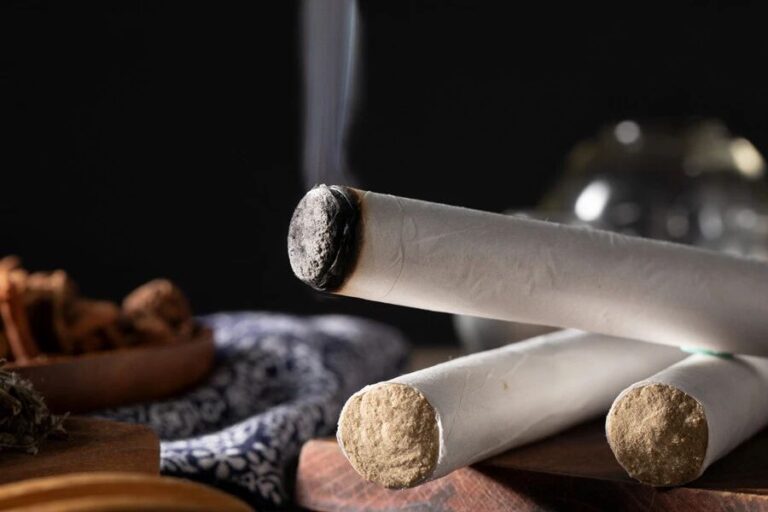
Standard mild moxa sticks (18mm × 200mm) are the most versatile for home use. Smokeless moxa is convenient for indoor practice with less smoke and odor. → Compare all moxa product types →
Can moxibustion be combined with other treatments?
Yes. Moxibustion works well alongside acupuncture, herbal medicine, and conventional medical care. Always inform your healthcare provider about complementary therapies you’re using.
Bottom Line
Moxibustion is a practical, effective home therapy for a wide range of common ailments — especially those rooted in cold, dampness, or deficiency. The key is matching the right condition to the right treatment and being consistent with your practice.
Start with one condition you’d like to address, follow the acupoint guidance above, and pay attention to how your body responds. Most people notice improvement within days to weeks of regular use.