How Do Moxa Sticks Work? Traditional Theory Meets Modern Science
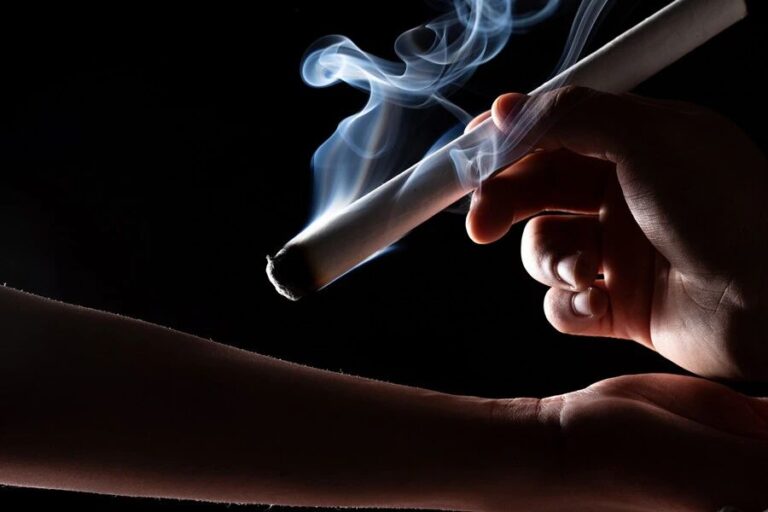
You hold a burning moxa stick near your skin — no needles, no pills, no machines. Yet somehow, this simple practice has been used for thousands of years to relieve pain, boost energy, and treat chronic conditions. How do moxa sticks actually work?
This article explains the mechanism from both perspectives: the traditional Chinese medicine theory that has guided practice for millennia, and the modern scientific research that is now validating those ancient observations.
What’s Inside a Moxa Stick?
Before understanding how it works, it helps to know what you’re working with. A standard moxa stick contains:
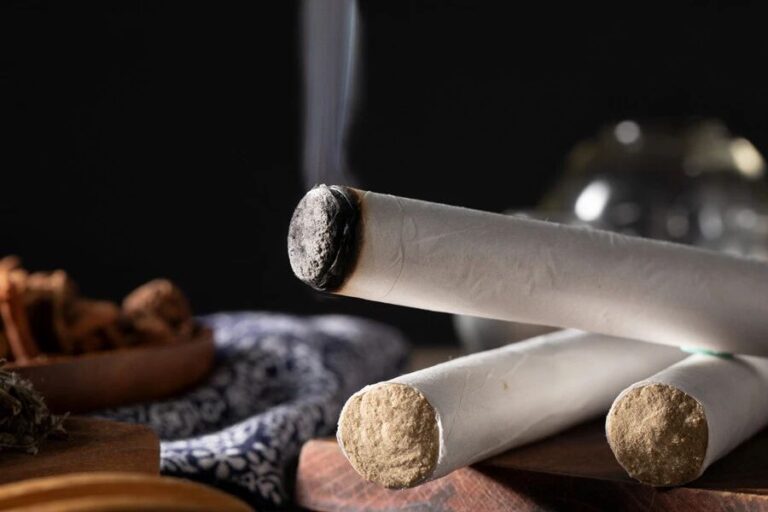
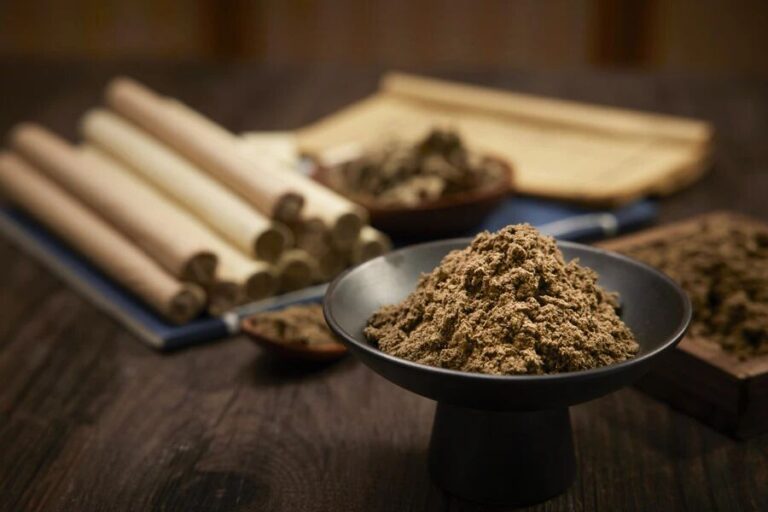
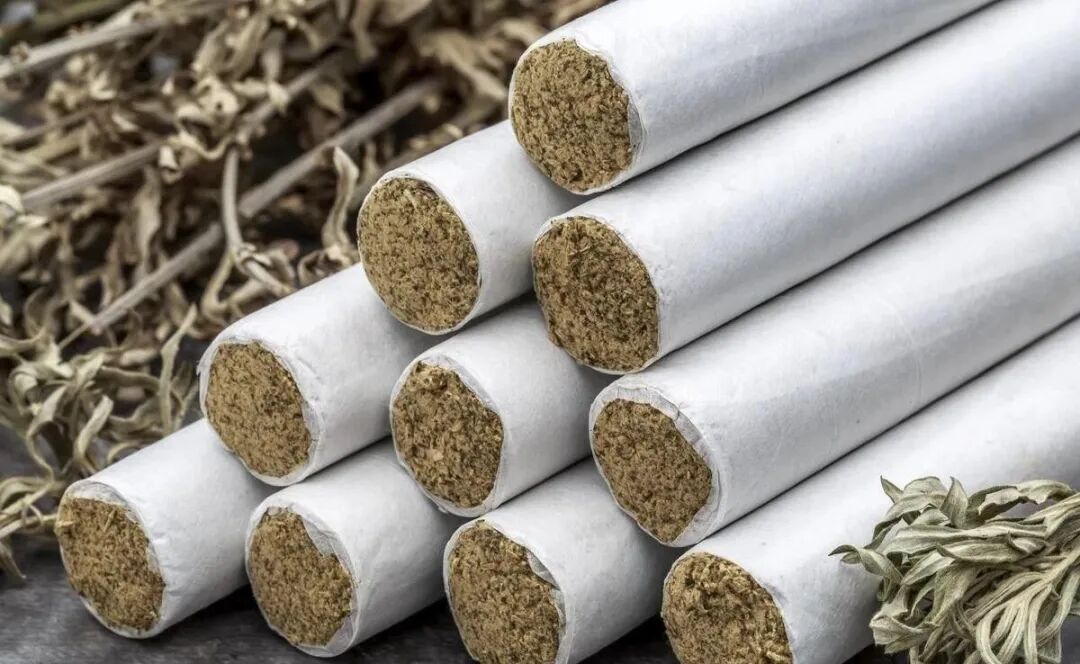
- Dried mugwort leaves (Artemisia argyi or Artemisia vulgaris) — ground into a fine, wool-like consistency called “moxa punk”
- Compressed into a cigar-like cylinder — typically 18mm diameter × 200mm length
- Wrapped in thin paper — that burns away as the stick is used
Mugwort is the essential ingredient. This aromatic herb has been used in Chinese, Japanese, Korean, and European traditional medicine for centuries. Its key properties include high flammability, slow-burning characteristics, and bioactive compounds released during combustion. → How to identify quality moxa sticks →
How Moxibustion Works: The TCM Explanation
1. Warms the Meridians, Dispels Cold
In TCM theory, health depends on the smooth flow of Qi (vital energy) and Blood through a network of channels called meridians. When cold or dampness invades the body — from cold weather, cold foods, or chronic weakness — the flow becomes sluggish or blocked. Like water freezing in a pipe, Qi stops moving freely.
Moxibustion’s penetrating warmth literally “melts” this cold blockage, restoring normal circulation. This is why conditions that worsen in cold weather or improve with warmth (aches, stiffness, digestive sluggishness) respond so well to moxa.
2. Tonifies Yang Qi (Restores Vital Energy)
Yang Qi is the body’s warming, activating, motivating force — your “metabolic fire.” When Yang is deficient, you feel cold, fatigued, and depleted. Moxibustion adds external Yang energy directly into the meridian system, rebuilding what has been lost and stimulating the body’s own energy production.
This is fundamentally different from simply applying heat. A heating pad warms the skin surface. Moxibustion, according to TCM, warms the channel itself — creating a therapeutic effect that persists after the moxa stick is removed.
3. Moves Qi and Blood, Resolves Stasis
Where there is pain, TCM says there is stagnation — “bu tong ze tong” (不通则痛: where there is no free flow, there is pain). The warmth and aromatic nature of moxa stimulates movement in stagnant areas, breaking up blockages and restoring circulation. This is why moxibustion is so effective for chronic pain conditions.
→ Complete guide to moxibustion’s therapeutic effects →
How Moxibustion Works: The Scientific Explanation
1. Far-Infrared Radiation (The Key Mechanism)
When moxa burns, it emits radiation primarily in the far-infrared spectrum (2–10 micrometers wavelength). This is critical because:
- Far-infrared radiation penetrates several centimeters into muscle and soft tissue — much deeper than the heat you feel on the skin surface.
- It doesn’t overheat the skin layer; instead, the energy is absorbed by deeper tissues where it triggers therapeutic biological responses.
- This wavelength matches the body’s own infrared emission, creating a resonance effect that enhances absorption.
Research published in the Journal of Traditional Chinese Medicine and other peer-reviewed sources has confirmed that moxa’s far-infrared emission profile is unique compared to other heat sources — it delivers energy at specific wavelengths that living tissue is most receptive to.
2. Temperature and Heat Distribution
The temperature profile of a burning moxa stick is worth understanding:
- Tip of the stick: 550–700°C (the combustion zone)
- Infrared emission zone: 200–400°C (where therapeutic radiation originates)
- Skin surface during treatment: 42–47°C (the comfortable therapeutic range)
- Subcutaneous tissue: Gradual temperature increase of several degrees, peaking 5–10 minutes after treatment begins
This layered heat delivery is what sets moxibustion apart from uniform heat sources like heating pads. The radiant warmth penetrates deeper and more gradually.
3. Activation of TRPV1 Receptors (The Heat-Sensing Channel)
TRPV1 (Transient Receptor Potential Vanilloid 1) is a protein receptor found on sensory nerve endings. It acts as the body’s “heat detector,” activating at temperatures above ~43°C — exactly the range moxibustion delivers.
When TRPV1 receptors are activated:
- They trigger the release of calcitonin gene-related peptide (CGRP) and substance P — neuropeptides that cause local vasodilation (blood vessel widening).
- This increased blood flow delivers oxygen, nutrients, and immune cells to the area while carrying away metabolic waste products.
- Animal studies have shown that repeated TRPV1 activation can reduce pain sensitivity and inflammation over time.
4. Immune System Modulation
Research has demonstrated that moxibustion affects the immune system in measurable ways:
- Increased natural killer (NK) cell activity — enhancing the body’s first line of defense against infected or abnormal cells.
- Modulation of cytokines — reducing pro-inflammatory markers (IL-1β, TNF-α) while boosting anti-inflammatory responses.
- White blood cell redistribution — studies show changes in leukocyte counts and activity after moxibustion treatment.
→ Deeper dive into the clinical research evidence →
5. Endorphin Release and Pain Modulation
The combination of heat, mild sensory stimulation, and TRPV1 activation triggers the body’s endogenous opioid system — your built-in pain relief mechanism. This explains why moxibustion can provide lasting pain relief for conditions like arthritis and chronic back pain, not just during the treatment itself.
Traditional vs. Smokeless Moxa: Does the Mechanism Change?
Smokeless moxa sticks use carbonized mugwort processed to reduce smoke production. The key differences:
- Traditional moxa: Burns hotter, releases more volatile aromatic compounds from the mugwort, and produces the characteristic herbal smoke that some studies suggest has mild antimicrobial properties.
- Smokeless moxa: Burns at a slightly lower temperature, produces minimal smoke and odor, and may deliver somewhat less of the volatile bioactive compounds. However, the far-infrared radiation emission (the key therapeutic mechanism) is still present.
For home use, smokeless moxa is more practical. For clinical settings, traditional moxa is often preferred for the full therapeutic profile. → Compare types in detail →
Does Moxa Smoke Have Therapeutic Properties?
Limited research suggests that moxa smoke contains volatile organic compounds with mild antimicrobial and anti-inflammatory properties. However, the primary therapeutic mechanism is the far-infrared radiation and heat — not the smoke itself. Good ventilation does NOT reduce the effectiveness of moxibustion.
Frequently Asked Questions
Why doesn’t a regular heating pad work the same way?
Heating pads deliver uniform surface heat. Moxibustion delivers targeted far-infrared radiation at specific wavelengths that penetrate deeper into tissue. The difference is like sunlight through a window (moxibustion) versus a space heater (heating pad) — both warm you, but through different physical mechanisms with different biological effects.
How does moxibustion differ from acupuncture?
Acupuncture uses mechanical stimulation (needle insertion) to activate points. Moxibustion uses thermal and infrared stimulation at the same points. They can be used separately or together. Some conditions respond better to heat than to needling, and vice versa.
Does the moxa stick need to actually touch the skin?
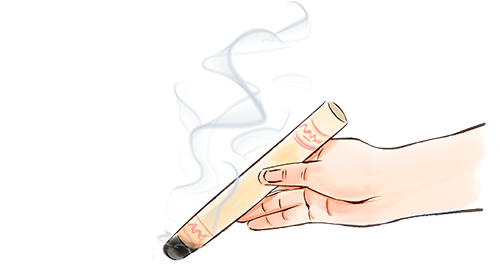
No. Indirect moxibustion — holding the stick 1–2 inches away from the skin — is the standard method for home use. Direct moxibustion (placing a small cone directly on the skin and removing it just before it burns) is an advanced technique requiring professional training.
Can I use moxibustion alongside conventional medicine?
Yes, moxibustion can be safely combined with most conventional treatments. It is a complementary therapy, not a replacement for medical care. Always inform your doctor about complementary therapies you’re using.
Bottom Line
Moxa sticks work through a combination of far-infrared radiation that penetrates deep tissue, TRPV1 receptor activation that increases local blood flow and triggers pain-relieving responses, and immune system modulation. The TCM explanation — warming meridians, dispelling cold, and moving Qi — describes the same physiological effects through a different framework developed over thousands of years of clinical observation.
Both perspectives point to the same conclusion: moxibustion is not folklore. It’s a sophisticated thermal therapy with measurable, reproducible effects on the body.