What is moxibustion used to treat?
Pain Management
Pain relief is the most common reason people turn to moxibustion. The deep-penetrating heat of moxa helps relax tight muscles, reduce inflammation, and improve local blood flow — targeting the root of many chronic pain conditions.
Lower Back Pain
Lower back pain often corresponds to “Kidney Yang deficiency” or “cold-dampness invasion” in TCM. Moxibustion applied to BL23 (Shenshu) and GV4 (Mingmen) on the lower back, combined with BL40 (Weizhong) behind the knee, can provide significant relief. Clinical studies show moxibustion reduces pain scores and improves functional mobility in patients with chronic lumbar strain.
Arthritis & Knee Pain
Osteoarthritis of the knee responds particularly well to moxibustion. The key points are ST35 (Dubi) — the “eye of the knee” — and SP10 (Xuehai). A 2016 meta-analysis in Evidence-Based Complementary and Alternative Medicine found moxibustion significantly more effective than conventional care for knee osteoarthritis pain relief.
Neck & Shoulder Tension
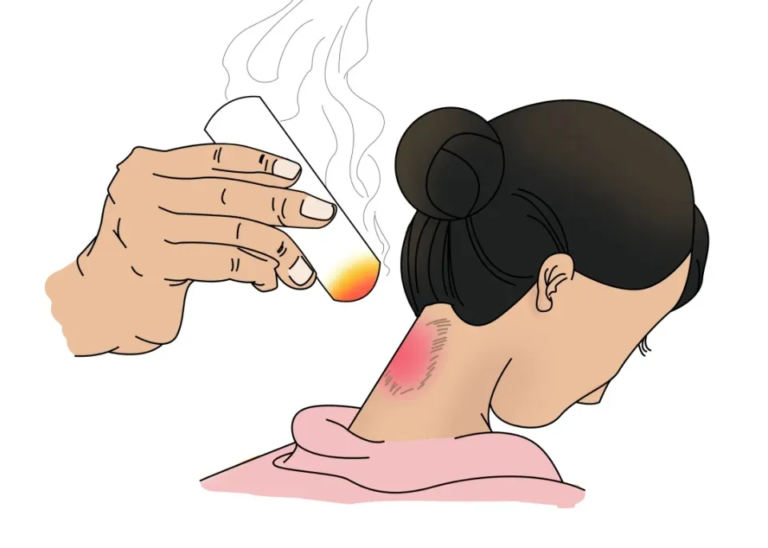
Modern desk work creates chronic neck and shoulder stiffness. Moxibustion on GB21 (Jianjing) — the shoulder well point — and GB20 (Fengchi) at the base of the skull releases tension and dispels the “wind-cold” that TCM associates with stiff necks.
Digestive Disorders
TCM views the digestive system as a “cooking pot” — the Spleen and Stomach transform food into Qi and blood. When this fire is weak (Spleen Yang deficiency), digestive problems arise. Moxibustion’s warming nature directly addresses this root weakness.
Irritable Bowel Syndrome (IBS)
For IBS with diarrhea and abdominal cold sensations, moxibustion on ST25 (Tianshu) — two finger-widths lateral to the navel — and CV8 (Shenque) directly on the navel (with salt-partition moxibustion) can regulate bowel function. A 2019 RCT published in the Journal of Traditional Chinese Medicine reported moxibustion was as effective as conventional medication for IBS-D with fewer side effects.
Chronic Diarrhea & Poor Appetite
Weak digestion with loose stools and poor appetite responds to ST36 (Zusanli) — the most famous digestive point, located four finger-widths below the kneecap. This point is so effective it’s nicknamed the “longevity point” (长寿穴) in TCM tradition. Combine with SP6 (Sanyinjiao) for enhanced effect.
Stomach Pain & Bloating
For stomach pain that improves with warmth, apply moxibustion to CV12 (Zhongwan) in the upper abdomen. This point directly targets the Stomach organ and is the go-to for epigastric discomfort, acid reflux, and post-meal bloating.
Women’s Health
Moxibustion has a particularly strong tradition in gynecology. In TCM, the uterus is vulnerable to cold, and moxibustion’s warming property makes it a first-line therapy for many menstrual and reproductive issues.
Menstrual Cramps (Dysmenorrhea)
For painful periods — especially when accompanied by cold hands and feet and a preference for warmth — apply moxibustion to CV4 (Guanyuan), three finger-widths below the navel. This point nourishes the uterus. Combine with SP8 (Diji) for acute cramp relief. Multiple clinical trials show moxibustion reduces menstrual pain scores by 40–60% after 2–3 cycles.
Breech Presentation (Evidence-Based!)
One of the best-studied applications of moxibustion is turning breech babies. The technique involves moxibustion on BL67 (Zhiyin) — at the outer corner of the little toe — performed daily at 34–36 weeks of pregnancy. A landmark 1998 JAMA study found a 75% success rate for cephalic version vs 48% in the control group. This is one of the few TCM therapies with Level I clinical evidence.
Fertility Support
Moxibustion on CV4 (Guanyuan), CV6 (Qihai), and KI3 (Taixi) supports reproductive health by warming the uterus and strengthening Kidney essence — the TCM foundation of fertility. While not a standalone fertility treatment, moxibustion is increasingly used as a complementary therapy alongside IVF.
Respiratory Conditions
Asthma & Allergies
Moxibustion on BL13 (Feishu) — the Lung Back-Shu point — and CV17 (Danzhong) in the center of the chest can help open airways and reduce allergic sensitivity. The famous “Sanfu Moxibustion” (三伏灸) — moxibustion performed on the three hottest days of summer — is a traditional preventive treatment for winter asthma attacks.
Frequent Colds & Weak Immunity
If you catch every cold going around, moxibustion on ST36 (Zusanli) and LI4 (Hegu) can strengthen the “Wei Qi” (defensive Qi) — the TCM equivalent of immune function. Regular preventive moxibustion (2–3 times per week) during cold season can reduce frequency and severity of respiratory infections.
Fatigue & General Weakness
Chronic Fatigue
For persistent exhaustion with cold limbs, brain fog, and low motivation, apply moxibustion to CV4 (Guanyuan) and GV4 (Mingmen). These points tonify Kidney Yang — the body’s fundamental “pilot light” in TCM. Many patients report noticeable energy improvement after 2–4 weeks of consistent practice.
Cold Hands & Feet
Perpetually cold extremities indicate poor peripheral circulation from a TCM perspective (Yang Qi failing to reach the extremities). Moxibustion on CV8 (Shenque) with salt-partitioning directly warms the body’s core, while LI11 (Quchi) and KI1 (Yongquan) improve circulation to hands and feet.
Neurological & Other Conditions
Tension Headaches
For stress-related headaches, moxibustion on GB20 (Fengchi) and LI4 (Hegu) provides gentle relief without medication. The warming vessels effect reaches the head and neck meridians, releasing tension at its source.
Post-Stroke Rehabilitation
In China, moxibustion is frequently used in stroke rehabilitation to stimulate motor recovery. Studies suggest moxibustion on ST36 (Zusanli) and LI10 (Shousanli) may enhance neuroplasticity and improve limb function when combined with conventional physiotherapy.
Quick Reference: Moxibustion by Condition
| Condition | Key Acupoints | Session Frequency |
|---|---|---|
| Lower back pain | BL23, GV4, BL40 | 3–5x/week |
| Knee arthritis | ST35, SP10, GB34 | 3–5x/week |
| IBS / diarrhea | ST25, CV8, ST36 | 2–4x/week |
| Menstrual cramps | CV4, SP8, SP6 | Daily during period |
| Breech correction | BL67 | 1–2x/day, weeks 34–36 |
| Asthma prevention | BL13, CV17, ST36 | 2–3x/week |
| Fatigue / weakness | CV4, GV4, ST36 | 2–3x/week |
| Cold hands & feet | CV8, LI11, KI1 | 3–5x/week |
Frequently Asked Questions
How soon will I feel results from moxibustion?
Acute pain often responds within 1–3 sessions. Chronic conditions typically require 2–4 weeks of consistent practice (8–12 sessions) for noticeable improvement. For more details on treatment timelines, see Effects of Moxibustion.
Can moxibustion help with weight loss?
Moxibustion is not a direct weight loss therapy, but it can support weight management indirectly by improving digestion (Spleen-Stomach function) and boosting metabolism through Yang tonification. Points like ST36, CV12, and SP6 are commonly used. It should be combined with diet and exercise for meaningful results.
Is moxibustion safe to combine with medication?
Generally yes — moxibustion is a complementary therapy, not a replacement for essential medications. However, always inform your doctor if you’re using moxibustion alongside prescription drugs, especially blood thinners or immunosuppressants.
Are there conditions where moxibustion should NOT be used?
Yes. Avoid moxibustion during acute fever, on open wounds or skin infections, on the face/head without professional guidance, and on the lower abdomen during pregnancy (except for professionally supervised breech correction). See our guide on What Not to Do After Moxibustion for complete safety information.
Start Your Moxibustion Journey
Moxibustion offers a safe, evidence-supported approach to dozens of common health conditions — from arthritis and digestive issues to menstrual pain and chronic fatigue. Its real strength lies in treating the root cause (cold, deficiency, stagnation) rather than just masking symptoms.
To get started, you’ll need quality moxa products and proper technique. Read our Beginner’s Guide, learn How to Use Chinese Moxibustion, and find the right supplies with our Moxa Products Guide.